 Withie
Get the app
When you feel distant
How to be a better partner in a relationship
If you're searching for this, you're probably already a better partner than you think, because wanting to show up well is most of it. The rest is a handful of small habits you can learn without becoming a different person.
What good partners actually do
Decades of relationship research point to something reassuring: the difference between strong and struggling couples is usually made of thousands of small moments: how you respond when your partner points out something on their phone, whether you look up when they come home, what you say first when they're upset.
John Gottman's research found that in stable couples, even during conflict, positive interactions outnumbered negative ones by roughly five to one. Being a better partner mostly means tipping that balance a little every day.
8 habits of a better partner
1. Turn toward small bids
Partners constantly make small bids for attention: a comment, a sigh, a joke, a touch. Respond to more of them. Look up, answer, ask a follow-up. In Gottman's research, this habit separated the couples who stayed together from those who didn't.
2. Listen to understand, not to fix
When your partner shares a problem, understand it before you try to solve it. Reflect what you heard before offering anything else.
“That sounds exhausting. Do you want ideas, or do you just want to vent?”
3. Be specific with appreciation
“Thanks for everything” slides off. “I noticed how patient you were with your dad today, I really admire that” is the kind of thing people remember. Aim for one specific thank-you or compliment a day.
4. Keep small promises
Trust is mostly built on little things: calling when you said you would, picking up the thing you said you'd pick up, being on time. Small follow-through tells your partner they can rely on you.
5. Own your mistakes quickly
Everyone snaps, forgets and misreads things. Better partners repair fast, without a “but”.
“I was short with you earlier and you didn't deserve that. I'm sorry.”
More on this in what to say after a fight.
6. Let your partner influence you
Gottman's research also found that relationships do better when partners actually take each other's opinions on board: changing plans, considering their view, saying “you're right, let's do it your way” sometimes. Your partner reads that as respect.
7. Stay curious about them
People change, so ask what they're excited, worried and dreaming about right now. Try a few of these daily questions for couples.
8. Show care in their language
Some people feel loved through words, others through help, touch, time or thoughtful gestures. Notice what lights your partner up and do more of that. Our guide on how to show your partner you care has ideas for each.
What to stop doing
- Scorekeeping. “I did the dishes three times this week” turns love into a ledger.
- Criticizing character instead of behavior. “You're so lazy” attacks who they are; “Could you take the bins out tonight?” asks for something specific.
- Half-listening. Nodding at your phone while they talk teaches them not to bother.
- Bringing up the past in every argument. Stick to the one thing at hand.
- Waiting for them to go first. Someone has to start being warmer, and it might as well be you.
Being a better boyfriend, girlfriend, husband or wife
People search for advice by role, but the fundamentals are the same for every partner. What changes is the details of the person you're with. A few prompts to make it specific:
- What did your partner mention this week that you could follow up on?
- What's one thing they do all the time that nobody thanks them for?
- What's stressing them most right now, and what could you take off their plate?
- When did they last seem really happy with you, and what was different that day?
And the simplest move of all: ask them.
“Is there anything I could do more of, or less of, that would make you feel more loved right now?”
Being a good partner when you're struggling
Many people search for this when they're dealing with depression, anxiety or a hard season, and worry that they're letting their partner down. If that's you, be gentle with yourself. You don't need to perform at your best to be a good partner. Being honest (“I'm having a hard week, it's not about you”) and doing one small kind thing a day goes a long way. And please consider talking to a doctor or therapist; taking care of yourself is part of taking care of the relationship.
How to start this week
Pick one habit, do it daily for a week, then add another, instead of trying all of this at once. If you'd like a structure, the guide to improving your relationship on your own walks through seven small daily steps.
Become a better partner one evening at a time
Most people know what good partners do; remembering to do it on a busy Tuesday is harder. Withie gives you one small, specific way to show up for your partner each day, based on what's going on between you right now.
- Reflect for two minutes.One private question a day about your relationship helps you notice what your partner might need right now.
- Do one thing tonight.A micromission with two concrete steps and the exact words, written for your partner by name.
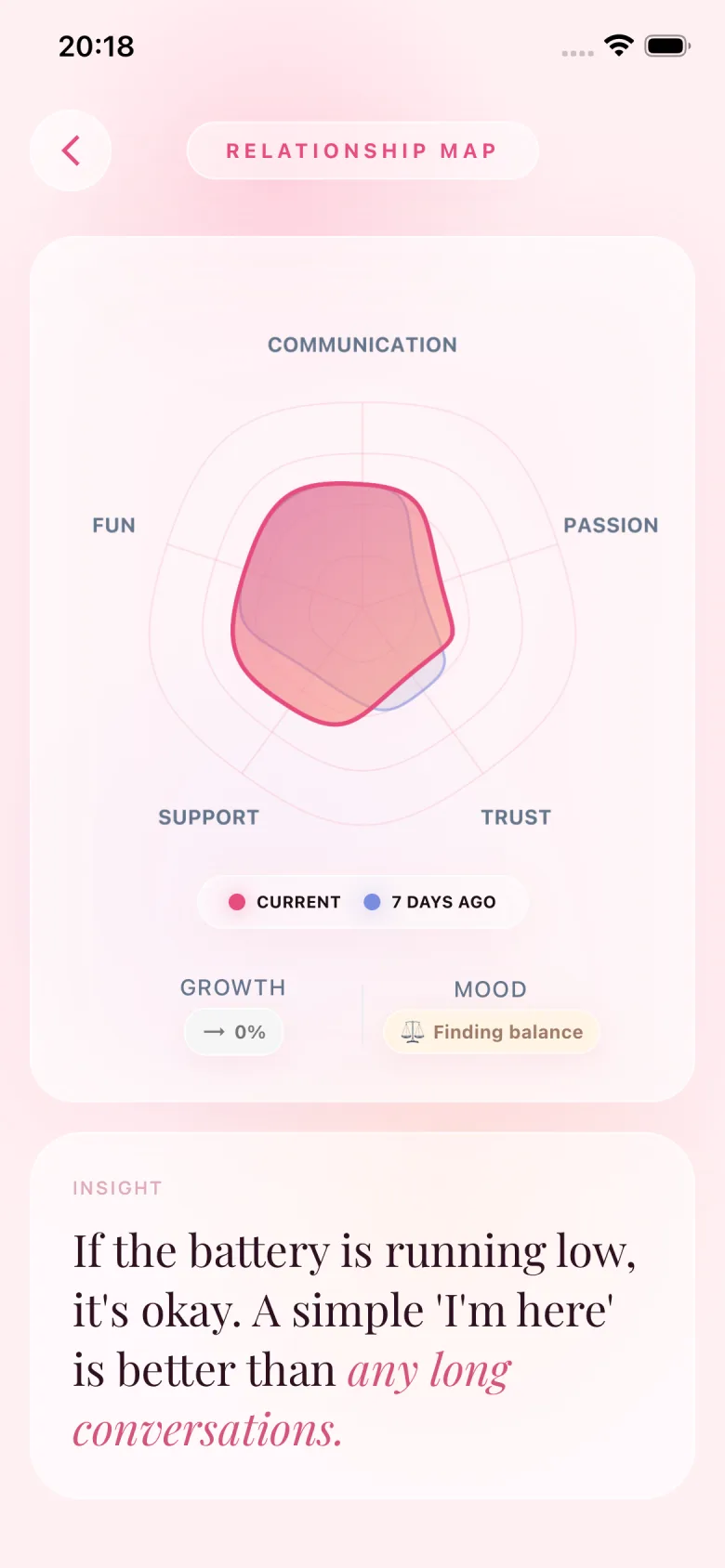
- See where you're growing.Your Relationship Map shows communication, passion, trust, support and fun, so you can see your strengths and where to focus next.

Questions people ask
What makes someone a good partner?
Reliability, warmth and attention. Good partners notice what's going on with the other person, respond kindly, keep their word on small things, repair quickly after conflict and make their partner feel liked as well as loved. You can do all of that without being perfect.
How can I be a better boyfriend to my girlfriend?
Pay attention to the specific person instead of following generic rules. Follow up on things she mentions, listen without jumping to solutions when she's upset, tell her specifically what you appreciate, and plan small things without being asked. Consistency matters more than romance.
How do I become a better partner emotionally?
Get better at naming your own feelings and sharing them in simple words, ask about your partner's inner world, and stay curious instead of defensive when they share something hard. Emotional availability is a skill you build through small, regular practice.
How do I know if I'm a good partner?
Ask. “Is there anything I could do that would make you feel more loved or supported?” is one of the most useful questions in a relationship. Then listen without arguing, and act on one thing.
This guide is general information, not therapy or medical advice. If you feel unsafe in your relationship, or you're in crisis, please contact a licensed professional or your local emergency number.