 Withie
Get the app
When talking is hard
What to say after a fight with your partner
The fight is over, but the air is still heavy. Nobody wants to go first, and both of you are quietly rehearsing your side. This guide gives you words for each stage, from the first message to the conversation that stops it happening again.
First, wait until you're both calm
The most common mistake after a fight is trying to fix it too soon. If either of you is still flooded (heart racing, jaw tight, rehearsing comebacks), the “make-up” conversation will turn into round two.
Give it at least 20 to 30 minutes. Go for a walk, take a shower, do something with your hands. Use the time to let your body settle instead of building your case, then reach out with something small.
The first words: breaking the silence
Save the explanations for later. The first message after a fight only needs to say: I'm coming back, and I'm not here to keep fighting.
“I don't like how that went. I'd rather be on the same side.”
“I love you. I'm still a bit upset, but I want to sort this out together.”
“Can we start over? I think we were both exhausted.”
By text, keep it even shorter:
“Hey. I hate when we're like this. Can we talk tonight?”
How to apologize so it actually lands
A good apology is specific, owns your part, and doesn't come with a “but”.
- Name the specific thing. “I'm sorry I brought up your mom in the middle of it” beats “sorry for everything”.
- Acknowledge the impact. “I can see that felt like a cheap shot.”
- Skip the “but”. “I'm sorry I snapped, but you…” cancels the apology.
- Say what you'll do differently. “Next time I'll ask for a break instead of raising my voice.”
“I'm sorry you feel that way.”
“I'm sorry I rolled my eyes when you were talking. That was dismissive, and you deserved to be heard.”
The repair conversation: 4 steps
Once you're both calm and the temperature is lower, it helps to talk about what happened so you both understand it, without re-arguing it.
1. Each share what you felt
Describe feelings and leave out accusations: “I felt dismissed”, “I felt cornered”, “I felt alone with it.” Take turns; the listener just listens.
2. Find the trigger
What set it off? Often something sits underneath the topic, like being tired, feeling unappreciated or an old sore spot.
3. Each own one part
Even if you think the fight was 80% their fault, own your 20%. It almost always invites them to do the same.
4. Agree on one small change
Skip the grand promise and pick one specific thing for next time, such as a code word for “I need a break”, no serious talks after 10pm, or checking in before assuming.
What to say to your girlfriend or boyfriend after a fight
The principles are the same for any partner, but people often search for words for a specific situation. A few examples:
If she felt unheard:
“I got defensive instead of listening. Can you tell me again? This time I'll just listen.”
If he went quiet and withdrew:
“I know I came on strong. I'm not trying to corner you. Whenever you're ready, I'd like to hear your side.”
If it was about something silly:
“Are we really fighting about the dishwasher? Come here.”
Humor can repair a lot, as long as it's warm and you're laughing together rather than at their feelings.
What not to say after a fight
- “Are you still mad?” It pressures them to be over it on your timeline.
- “I said sorry, what more do you want?” It turns the apology into a transaction.
- “You always do this.” It reopens the fight with a bigger charge.
- “Fine, whatever.” It shuts the conversation down without making up.
- Silence for days. Space is fine; punishment isn't.
Reconnecting after the fight
Talking repairs the rupture, and small gestures bring the warmth back. After you've talked, do one small, kind thing: make them tea, offer a long hug, suggest a walk, send a silly message the next morning. It shows both of you that the relationship is bigger than the argument.
If fights keep coming back, the next step is changing how you talk before things blow up. Start with how to talk to your partner without fighting.
Get the right words for your person
Generic scripts are a good start, but the words that land fit your partner: their sense of humor, what makes them feel safe, what they need to hear. Withie writes those words for you.
- Tell Withie what's going on.Answer the day's question honestly and privately, whether you're still annoyed or ready to make up.
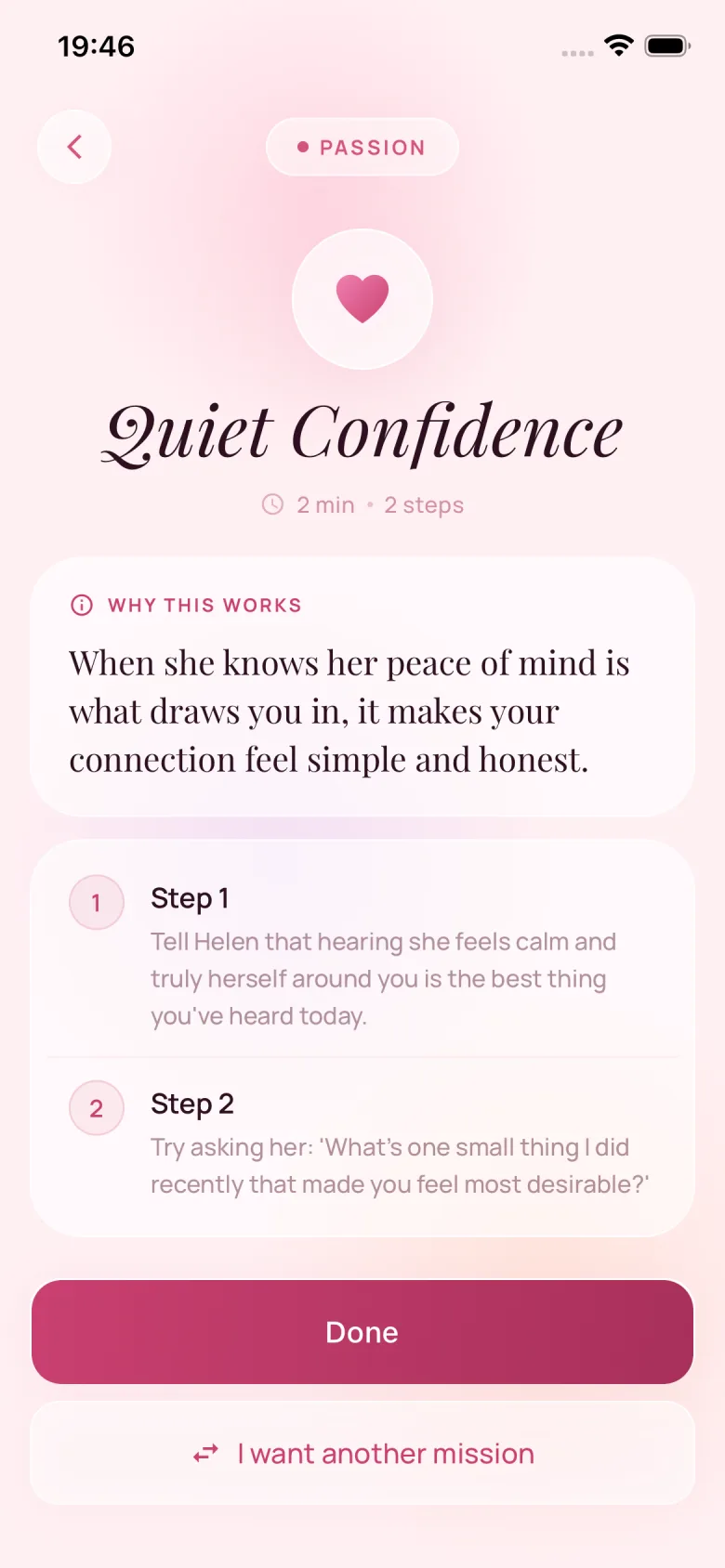
- Get a repair step that fits.Your micromission suggests what to say first and one small gesture, written for your partner by name. Not the right fit? Ask for another.
- Watch trust recover.Each finished mission moves your Relationship Map, including trust and communication.

Questions people ask
Who should apologize first after a fight?
Whoever is ready first. Going first doesn't mean you were entirely wrong. It means the relationship matters more to you than keeping score. You can apologize for your part (“I'm sorry I raised my voice”) without taking the blame for everything.
How long should you wait to talk after a fight?
Long enough for both of you to calm down physically, usually at least 20 to 30 minutes, sometimes until the next morning. Don't leave it for days, though: say something small to show you're coming back, even if the real conversation waits.
Is it OK to make up over text?
A text is a fine way to break the silence or to say sorry for your part, especially if talking in person feels too charged. Save the actual repair conversation for in person or a call, where tone and warmth come through.
What if we keep having the same fight?
Recurring fights are usually about a deeper difference or need underneath the surface topic. Next time you're calm, ask “what does this mean to you?” rather than re-arguing the details. Our guide on talking without fighting covers this in detail.
This guide is general information, not therapy or medical advice. If you feel unsafe in your relationship, or you're in crisis, please contact a licensed professional or your local emergency number.