 Withie
Get the app
Small daily things
Relationship check-in questions (and a weekly ritual that sticks)
A relationship check-in is a short, regular conversation about how you're doing as a couple, and done well it feels nothing like a “we need to talk” moment. This guide gives you a simple format, the questions to use, and ways to keep it from feeling like a performance review.
What is a relationship check-in?
A relationship check-in is a planned, short conversation where you and your partner talk about the relationship itself: what's working, what's been hard, and what you each need. Relationship researchers John and Julie Gottman recommend a weekly version they call a “State of the Union” meeting, and many couples therapists suggest something similar.
The regularity matters more than any particular question. When there's a dependable time to bring things up, small irritations don't have to be raised in the heat of the moment, and they don't get stored up for months either.
A simple 20-minute weekly format
Pick the same time each week, ideally when you're both rested: Sunday morning coffee, or a weeknight after dinner. Phones away.
- Appreciation (5 minutes). Each share two or three specific things you appreciated about the other this week.
- Highs and lows (5 minutes). What felt good between you, and what felt hard? Listen; don't debate.
- One thing to adjust (5 minutes). At most one topic each. Use a soft start: “I felt… when… could we…?”
- Needs for next week (3 minutes). What's coming up, and what would help each of you?
- Something to look forward to (2 minutes). Plan one small thing just for the two of you.
End on the plan for fun, so the check-in finishes with something to look forward to instead of criticism.
12 weekly check-in questions
- What's one thing I did this week that you appreciated?
- When did you feel closest to me this week?
- When did you feel furthest from me?
- What was the hardest part of your week?
- Is there anything left unsaid from this week?
- Did anything I did or said hurt, even a little?
- What's one thing I could do next week to support you?
- How are you feeling about how we've been splitting things at home?
- How's your stress level, on a scale of 1 to 10?
- Did we have enough fun together this week?
- Is there anything you're worried about coming up?
- What's one thing we should do together next week?
8 deeper questions for a monthly check-in
- What's been your favorite moment with me this month?
- Do you feel heard by me lately?
- Is there a need of yours that's been going unmet?
- How do you feel about our physical affection and intimacy right now?
- Are we spending our time the way we want to?
- Is there a goal or dream you'd like more support with?
- What's one habit of ours you'd like to change?
- What's something new you'd like us to try?
Quick daily emotional check-ins
Between weekly check-ins, a 30-second daily one keeps you in sync. Ask one of these over dinner or before bed:
- “How full is your tank today, honestly?”
- “What's one word for how you're feeling right now?”
- “What do you need tonight: talking, quiet or distraction?”
- “Anything on your mind I should know about?”
- “Best and worst part of today?”
- “Anything I can do for you tomorrow?”
For more everyday prompts, see 50 questions to ask your partner every day.
How to keep it from feeling like a performance review
- Keep it short. Twenty minutes is plenty. Longer check-ins start to feel like work.
- Make it pleasant. Good coffee, a walk, a favorite spot. Pair it with something you both enjoy.
- Appreciation before feedback, always. Starting warm builds goodwill for the rest.
- One issue max. If something big comes up, schedule a separate conversation.
- Listen to understand. Reflect back what you heard before you reply.
- Skip it when someone's flooded. A check-in isn't the place to process a fresh fight. For that, see what to say after a fight.
If your partner isn't into “check-ins”
Some people hear “relationship check-in” and imagine a formal meeting with an agenda. If that's your partner, drop the name and the structure. Just ask one of the questions above on a walk or over dinner. What matters is regular, low-pressure conversation about the two of you, whatever you call it.
You can also start on your own side: reflecting on the relationship daily and turning it into small things you do for your partner. Many partners who would never agree to a “check-in” still respond warmly to the results.
A daily check-in you can start on your own
Not every partner wants a weekly sit-down, and that's OK. Withie works like a lighter daily check-in you do on your own in two minutes, and it turns your answer into one small thing to do for your partner.
- Check in with yourself daily.One question about how things feel between you, answered privately in your own words.
- Act on it tonight.Withie suggests a small step for your partner by name: a question, a phrase, a gesture.
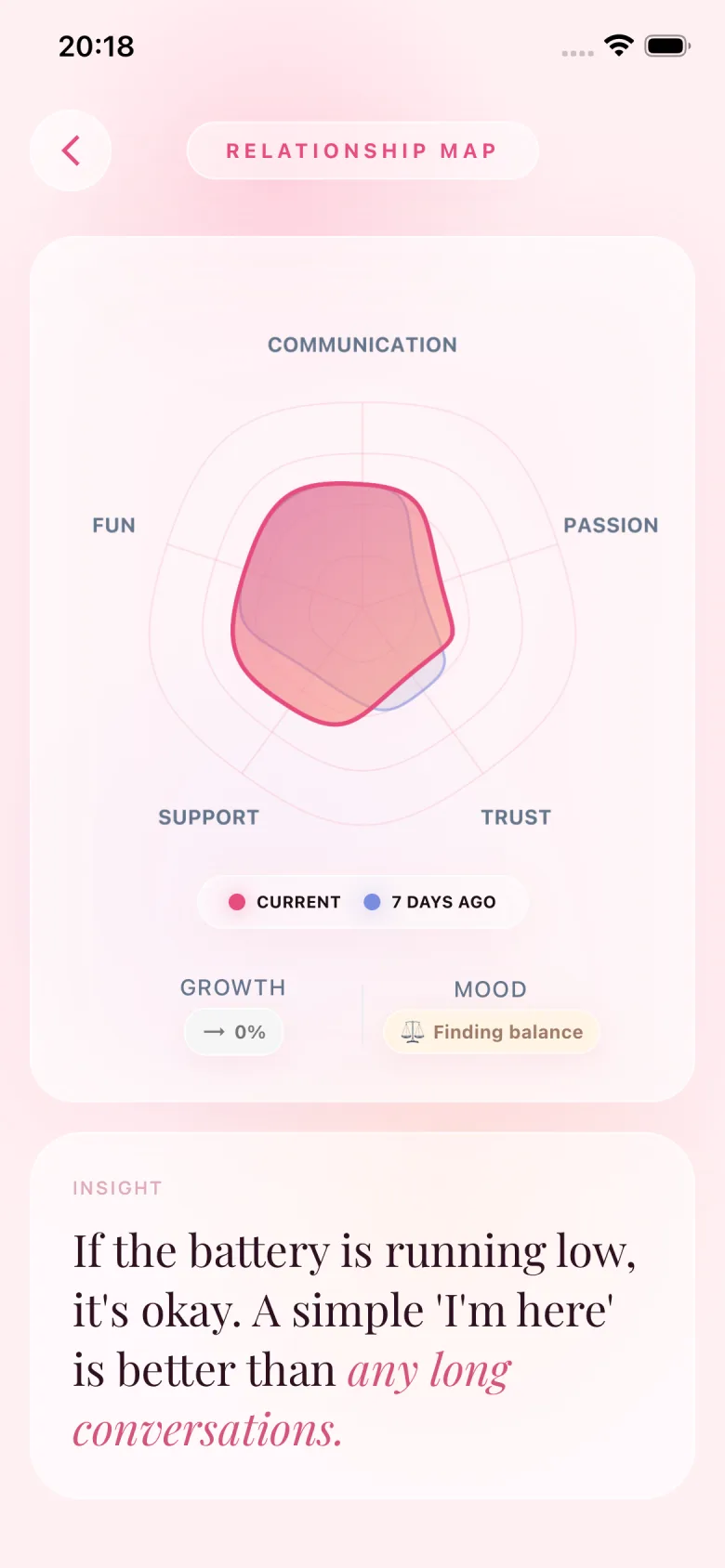
- Review the week on your map.Your Relationship Map shows communication, passion, trust, support and fun now versus seven days ago, which gives you something to bring up in a weekly chat.

Questions people ask
How often should couples do a check-in?
Weekly works well for most couples: often enough that nothing piles up, rare enough that it doesn't feel like a chore. A quick daily emotional check-in (one question each) plus a slightly longer weekly one works well together.
What do you talk about in a relationship check-in?
What went well this week, what felt hard, anything left unsaid, what each of you needs in the coming week, and one thing to look forward to together. Start and end on something positive.
What if a check-in turns into an argument?
Pause it. A check-in is for noticing things; you don't have to solve everything in it. Agree to come back to the hard topic separately, then finish with appreciation. If it keeps happening, keep check-ins shorter and lighter for a while.
Are relationship check-ins only for couples with problems?
No, they work best for couples who are doing fine. They keep small irritations small and show both partners that the relationship gets attention even when nothing is broken.
This guide is general information, not therapy or medical advice. If you feel unsafe in your relationship, or you're in crisis, please contact a licensed professional or your local emergency number.